The 5 Most Important Fish Aquarium Maintenance Routines
By Clifford Woods
One of the most essential things you can do for your freshwater fish tank is to take care of it and keep it thoroughly clean. Needless to say, with our hectic day-to-day lives, what we need to know is exactly what is most crucial in keeping up with our freshwater fish tanks and how we can do it quickly.
Below is a list of the five most significant things you will need to do in order to keep your aquarium in good condition, according to the experts. These quick clean ups are not that difficult, particularly if you do them at the same time each month. If you cannot in any way do these basic things, then owning a fish tank may not be for you.
Task: Test Water
When: Monthly
Whenever your aquarium is initially established, make sure to test the pH of the tank water every couple of days. Get an examination kit from your local pet store. Following that, check the water every week for the first couple of months. Following those two months, you can examine the water once a month, unless of course your fish are displaying irregular behavior. You can find out what the correct ph balance should be for your aquarium from your local fish shop.
Task: Change Water
When: Weekly
Swap out your fish tank water once a week if you can, however you may also do it every other week if you have to. You will just need to change about twenty percent of your tank's water. The easiest way to do this is to remove the water with a pipe.
Find a hose or fish tank tubing, place one end of the pipe into your fish tank, and then suck on the opposite end of the hose, with the hose lower than the water level of the fish tank. Make sure to have a suitable container prepared, since the water will come flowing out. Allow the water from the tank to flow into the container until about twenty percent of the water is taken out of your aquarium. Then add new water.
Task: Change Filter
When: Depends on Filter Model, Check Instructions
There are numerous fish tank filter systems available today. Therefore, the only guidance here is to take a look the guidelines and they will tell you when to switch your filter.
Occasionally it can be every three or four weeks for non reusable filters. At times, it is every six months before they need to be replaced. There are types that you can clean yourself, so simply keep close track of them and thoroughly clean them as per the instructions that come with the filter.
Task: Vacuum
When: Weekly
Make use of a gravel vacuum machine to draw out the waste materials, harmful toxins and outdated food items in the bottom of your fish tank. Aquarium vacuums are generally great for removing waste substances and are available in all kinds, shapes and sizes based on the capacity of your fish tank.
All of them work just a little bit differently, so be sure to check the directions that are included with them. All of them are quite simple to work with.
Task: Remove Algae
When: Monthly or as needed
Nothing appears more severe than algae creeping up the edges of your aquarium. On that subject, almost nothing looks better than a clear and clean fish tank that you can easily see through.
You can buy algae scraping tools as well as various other tools to get rid of the algae from the aquarium. They are generally simple to use. Simply pick one that you like and use it frequently.
An all-natural solution can also be purchased to get rid of algae.
Look for one that offers both aerobic and anaerobic beneficial microorganisms as it is the best type of product for the job.
* * *
Clifford Woods is the CEO of Effective Environmental Services and Organic Environmental Technology.
We brew Beneficial Microorganisms and offer Natural Organic Solutions
Main Differences Between Freshwater and Saltwater Fish Tanks
By Clifford Woods
Fish tanks can be quite a fantastic addition to your office or home. They give a distinctive ornamental touch while providing pleasure in viewing the work of art you have created. Furthermore, aquariums can provide a calm and soothing feel to any area. After you have made the decision to invest in having a fish tank in your house, the next thing you need to determine is exactly what kind of aquarium you will have.
There are primarily two types of aquariums for you to select from: freshwater or saltwater. Each type of tank has its own special advantages, specifications, and problems. It is very important to check them out full before you finally make your decision and buy one.
The Differences
Fish Species
Among the most unique distinctions between freshwater and saltwater tanks is the varieties of fish. Freshwater fish are usually present in streams, ponds, rivers and lakes while saltwater fish are located in seas and oceans. Generally, freshwater fish are aquarium-raised while saltwater fish are from the wild.
Saltwater fish tend to be more attractive in color and are for sale in a greater variety than freshwater fish, yet can be more delicate to alterations in water temperature and chemical balance. Be sure you do extra research or consult with your local fish store in order to find out which fish will do well together.
Equipment
When choosing your aquarium, take into account the location in your home that you wish to put the fish tank. Nearly every size tank will work well as a freshwater or saltwater aquarium; having said that a bigger fish tank is going to be simpler to keep chemically well balanced and will present numerous choices when choosing fish and add-ons. Most aquarium devices are made to work in both freshwater and saltwater aquariums.
Lighting is important in any type of fish tank to sustain the healthiness of the fish. Lighting specifications vary according to the kind of tank along with the fish and plants that live in it. Maintaining a consistent temperature and having an acceptable filtration system is necessary in any aquarium ecosystem.
Lastly, you should have a water testing kit. This will assist you in keeping track of the levels of your water and make changes as required to keep up an adequately well-balanced atmosphere.
Upkeep
General maintenance does not vary a great deal between a freshwater and saltwater aquarium. With either choice, you will have to make sure that all devices are running correctly and replacing filter systems and cartridges as required. The container may also have to be cleaned out regularly.
Cleaning the fish tank will generally require you to replace between ten and twenty percent of the water quantity every other week. The water taken out throughout the course of vacuum-cleaning the gravel is generally enough.
Remember that the new water added will have to be treated based on the type of fish tank you are maintaining before being put into the aquarium. Washing the tank walls and examining the water for correct chemistry levels are also important parts of fish tank upkeep.
It would be a good idea to have an algae scraper on hand or perhaps an all-natural solution with beneficial microorganisms to get rid of the algae without harming the fish.
Making Your Choice
Deciding between a freshwater or saltwater fish tank can be quite the complicated thing, even so it is not a choice that you need to make in a rush.
Sustaining a fish tank is a commitment and you must be ready for the upkeep and expense of offering the best setting for your fish.
With the proper attention, aquariums can be quite a wonderful inclusion to your house that you can take pleasure in for a long time.
* * *
Clifford Woods is the CEO of Effective Environmental Services and Organic Environmental Technology.
We brew Beneficial Microorganisms and offer Natural Organic Solutions
All about Pond Magician and How to Use it Effectively
By Clifford Woods
Pond Magician is made up of an incredible number of beneficial microorganisms that maneuver through your pond and consume the microbes and contaminants which make your pond unpleasant as well as foul-smelling. Unlike similar pond cleaners which exclusively deal with natural materials, Pond Magician is made up of both aerobic and anaerobic beneficial microorganisms, therefore making it easily adaptable to a large selection of pond water situations.
What are Beneficial Microorganisms?
Beneficial microorganisms are composed of an incredible number of friendly microorganisms. Generally, they simply eat up the algae and unwanted organisms. These microbes are advantageous to the water, plants, and fish life that thrive within your pond and they can be extremely eager for the impurities and organisms which make your pond unclean.
A few of the beneficial microorganisms can flourish even within environments where there is little if any breathable oxygen available. For this reason, beneficial microorganisms are quite effective regardless of the situation. Apart from being less expensive when compared with other deodorizing remedies, the application process is quite easy.
How to Use Pond Magician and Determine the Quantity Needed
Pond Magician is incredibly user-friendly. Simply pour it into your pond directly from the container. Put just a little at a handful of locations around the border of the pond or even dump it into the flow or waterfall for those who have one. The concept is to get the solution equally distributed within the pond. You may also apply it on top of the pond's surface area with a backyard sprayer. This can help in the case that you have a large amount of surface algae.
Before you apply it, first you have to determine the amount of gallons in your pond by employing this basic formula:
- Multiply the average length in feet of the pond by the average width in feet.
- Then multiply that answer by the average depth in feet.
- Then multiply that answer by 7.48.
- This answer is the approximate number of gallons in your pond.
After that, making use of the guidelines below will determine the quantity of Pond Magician you will need for two applications.
0-1,000 Gallons = 1 Quart
1000-5000 Gallons = 1 Gallon
5,000 - 12,500 Gallons = 2.5 Gallons
12,500 Gallons or More = Please give us a call for precise instructions at (818) 897-4444
The Benefits of Pond Magician
As these beneficial microorganisms carry out their job, your pond will receive the subsequent advantages:
- The pond is going to have an extremely enjoyable, refreshing aroma.
- The pond water is going to be as healthy and crystal clear as water coming down a flowing mountain stream.
- The plants and fish will be extremely pleased and live longer.
Over dosage Precautions
Essentially, there is absolutely no chance of overdose due to the fact Pond Magician is made up of beneficial microorganisms. On the other hand, using more than needed will become significantly less cost-effective to the customer. In contrast to chemical products, where there exists a devastating consequence when overdosing occurs, organic bio-solutions only will stop functioning whenever there isn't enough excessive nourishment within the pond.
The main issue linked to overdosing beneficial microorganisms, besides cost, is the fact that when there is a great deal of natural and organic accumulation when you overdose, it is possible to induce an excessive amount of activity and need for oxygen. Basically, an over dosage of microorganisms would use up the oxygen in the water that sustains the fish.
Where to Purchase Pond Magician
Pond Magician is a product developed and sold by c. The company is dedicated to the brewing of Beneficial Microorganisms to eat toxins in the environment and selling of environmentally friendly products.
* * *
Clifford Woods is the CEO of Effective Environmental Services and Organic Environmental Technology
We brew Beneficial Microorganisms that eat toxins and offer Natural Organic Solutions.
Control and Eliminate Algae with UV Sterilizer
By Clifford Woods
If you have been putting up with algae, then it is likely that you do not own a UV sterilizer for your pond. Without a doubt, UV light is crucial for all ponds where metabolic action occurs.
Pond algae are brought on by microscopic algae cells that feed on aerobic bacteria in the water. They are especially common during the summer seasons while there is a great deal of sunshine.
A little quantity of green pond algae is helpful to marine pond life like Koi and other fish as they use it as a food supply as well as camouflage from predatory birds.
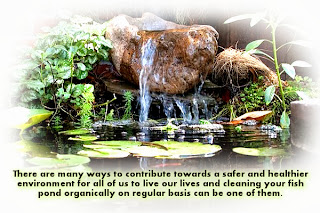 Algae additionally act as cover from the sun on hot summer time days.
The fact is that pond algae multiplies at an extraordinary pace and if left without treatment it will ultimately wreck the look of your pond and can begin to hinder the pond pH balance as well as the amounts of oxygen within the pond.
The simplest way to manage pond algae is by using a UV sterilizer, also referred to as a UV clarifier, UV illumination or simply just a UV.
Algae additionally act as cover from the sun on hot summer time days.
The fact is that pond algae multiplies at an extraordinary pace and if left without treatment it will ultimately wreck the look of your pond and can begin to hinder the pond pH balance as well as the amounts of oxygen within the pond.
The simplest way to manage pond algae is by using a UV sterilizer, also referred to as a UV clarifier, UV illumination or simply just a UV.
A number of people would rather use pond algaecide products which are only safe if it is completely organic and contains beneficial microorganisms.
The Struggle with Temperature
The strength of blue ultraviolet light which is created at a specific wavelength is a wonder for pond owners. UV light comes about by natural means in nature and is a primary reason we get sunburned when we are out in the sun. The performance of a UV sterilizer is affected by temperatures to a large extent. If the unit is positioned under the pond's surface then it will work at no matter what the water temperature happens to be.
The way in which companies bypass the drop in effectiveness is to use a quartz sleeve, which will protect the lamp from cold water temperature ranges, guaranteeing optimum effectiveness is taken care of. Ultraviolet light transfers effortlessly through quartz, but not glass. This is why quartz sleeves are utilized rather than glass in the production of UV sterilizers.
Be mindful that not every producer makes use of a quartz sleeve; a few use plastic covers. Glance at the production standards and if it does not have a quartz sleeve, investigate another product.
The UV Sterilizer System
Pond water is streamed by way of a quartz tube, blocking chilly pond water from coming directly into contact with the ultraviolet source of light. Keep in mind that UV performance is affected by temperatures and functions suitably at one hundred degrees Fahrenheit. As the water moves through the sleeve, it is hit by UV rays, either directly or reflectively.
The ultra violet illumination eliminates the algae by wiping out the cell walls, leading to what is known as flocculation to occur. This mass that is too large to pass through the mechanized purification systems employed by your pond filter and is caught and taken from the pond water.
Organic filtration systems are made up of pond plants which are intentionally deprived of nutrition. The marine plants obtain their food supply from the nitrates within the pond water. They contend with algae for the nourishment and for that reason help in keeping the pond algae in check. They don't ensure algae-free garden ponds though.
The only real assured strategy for managing green pond algae is by using a UV sterilizer or a probiotic algaecide solution plentiful of beneficial microorganisms. Such an option will completely eradicate the algae from your garden pond as well as boost the overall health of the vegetation and fish within your pond.
---
Clifford Woods is the CEO of Effective Environmental Services and Organic Environmental Technology
We brew Beneficial Microorganisms that eat toxins and offer Environmentally Friendly Products
Easy Methods to Eliminate Cloudiness in Aquariums and Fish Ponds
By Clifford Woods
If you are among the many individuals looking for tips on how to clean up a cloudy fish pond or aquarium and have carried out just about everything the professionals say to do, yet you've still got cloudy water, then the advice below should be of help.
There are various factors as to why a pond will end up green or cloudy. Weather conditions tend to be the leading culprit. Various temperature ranges, rainwater, and an excessive amount of sunlight will play a role in a cloudy pond.
Furthermore, insufficient purification and over-feeding will result in difficulties, along with inadequate chemical compounds. Listed here are a few of the real solutions when it comes to preserving a fish pond or aquarium.
Filtration Systems: Are They All the Same?
- Submersible filtration systems are challenging to upkeep since you need to climb into the waters in order to execute proper servicing of them plus they usually elevate the temperature of the water.
- Sand filters are generally difficult to thoroughly clean and don't capture all of the particles within the sand, enabling a few to re-enter the pond or aquarium. Furthermore the sand filter needs to be functioning twenty-four hours each day for ideal purification and should be back washed on a regular basis.
- The bio-filter is nearly the same as the sand filtration system only that it can be even tougher to completely clean.
- Cartridge filters are likely to be the most effective filters to make use of. They filter out basically all of the wastes, are incredibly simple to wash, and keep working for an extended period of time. You may use cartridge filters in fish aquariums as well.
Which Chemical Solution Should I Purchase?
Algaecide is highly suggested to get rid of algae and clearing up any cloudy or green pond. On the other hand, algaecide is toxic not just to your fish, but to the surrounding environment as well. Algaecide consists of copper sulfate which can build up in the internal organs of fish and other creatures.
A few cities have prohibited copper sulfate since it seriously will contaminate bays and lake and can be considered unsuitable for aquatic environments. There is, however, an organic algaecide that exists filled with beneficial microorganisms which will benefit the overall wellness of the pond. A probiotic solution is one of the best choices you can make.
Oxygen Generating Plants May Be a Good Idea
Any underwater plant species that thrives beneath the surface of the pond, or even if part of a plant is submerged underneath the pond water, is considered to be an oxygen generating plant. These underwater plants typically have thin roots designed only for anchorage to prevent movement from any currents or wind.
The nutrition and gaseous transaction occur on the exterior of the plant directly to each individual cell. With these plants in the water, you can be sure that any cloudiness will start to vanish due to an increase of oxygen in the water.
Install a UV Clarifier
One of the most effective methods for managing pond cloudiness and algae is to install a UV clarifier. The potency of the UV illumination, which is produced at a particular wavelength, is a miracle for pond keepers. UV light is a natural occurrence and is the main trigger of sun burnt skin when we are in the sun for an extended period of time.
The ultra violet light rays eradicates the cloudiness by getting rid of the cell walls of the algae, bringing about the system known as flocculation, which is essentially the process in which bacteria heaps together into large clumps. This bulky piece of bacteria is now far too big to simply go through any filtration systems without notice, so the next time it runs through a filter it will be removed for good.
---
Clifford Woods is the CEO of Effective Environmental Services and Organic Environmental Technology
We brew Beneficial Microorganisms that eat toxins and offer Environmentally Friendly Products